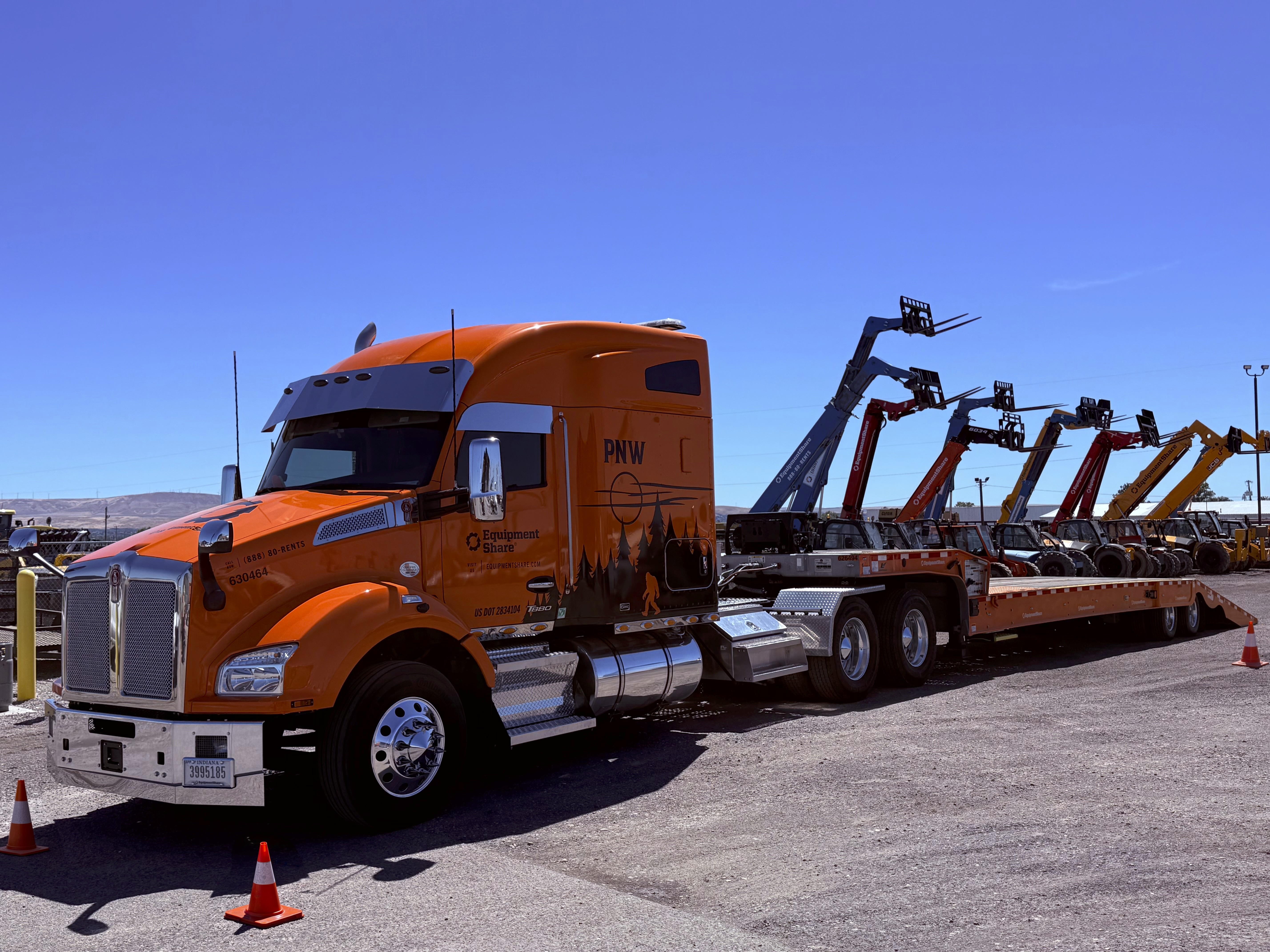
Case Study: A nationwide equipment rental and delivery fleet, T3 dash cameras, and a driver coaching program that changed behavior first — and let the incident rate follow.
EquipmentShare operates one of the largest equipment rental and delivery fleets in the United States, with thousands of trucks and drivers operating across every region of the country.
In January 2025, EquipmentShare deployed T3 dash cameras and the T3 Driver Safety & Performance program across its fleet.
Twelve months later, the numbers told a clear story.
This is what a fleet driver safety program can deliver when it is designed to change driver behavior — not simply document incidents after they happen.
The Results at a Glance
The headline figure is the one every safety director watches closely: at-fault DOT recordable incidents per million miles fell 37% year over year.
This was not a limited pilot involving a few dozen trucks. It was a nationwide fleet measured against a consistent DOT recordable incident standard.
The Challenge: Safety at Scale
EquipmentShare faces the same challenge every fast-growing fleet eventually encounters:
More trucks. More miles. More drivers. More deliveries. More exposure.
The costliest events — at-fault material-loss incidents involving $5,000 or more in damage — create costs that extend well beyond the initial accident, including:
- Vehicle and equipment repairs
- Fleet downtime
- Insurance claims
- Operational disruption
- Increased safety exposure
The conventional safety playbook can struggle to keep pace with that kind of growth.
Safety meetings, policy reminders, and after-the-fact incident reviews all address incidents after something has already happened. They do not necessarily change what a driver does behind the wheel tomorrow morning.
EquipmentShare wanted a program that could intervene before the incident and continue working as the fleet grew.
That is what T3 was designed to do.
How the T3 Driver Safety Program Works
T3 is not simply “put a camera in the cab and hope.”
It is a closed-loop safety program designed to identify risky behavior, validate what happened, coach the driver, and give drivers visibility into their own performance.
1. Video Uploads Only When a Qualifying Event Occurs
T3 dash cameras do not continuously upload footage of drivers throughout the day.
Video is uploaded when the system detects a qualifying event, such as:
- Forward Collision
- Following Closely
- Phone use
- Speeding
- Other configured high-risk driving behaviors
The focus is on capturing specific safety events rather than continuously monitoring drivers.
2. AI Flags the Event. People Review It.
T3's AI identifies the event and classifies the potential risk.
EquipmentShare's Safety team then reviews the footage in context.
For example, a hard-braking event caused by another vehicle cutting in front of the driver may not represent unsafe driving. Events determined to be false or non-preventable are discarded rather than held against the driver.
3. Confirmed Patterns Trigger Coaching — Not Just Discipline
When a driver demonstrates a confirmed pattern of high-risk behavior, T3 provides the evidence needed for a documented coaching conversation between the driver and their manager.
The conversation is:
- Specific
- Supported by video
- Focused on the actual behavior
- Designed around improvement
The goal is not simply to identify bad driving. It is to help drivers become safer.
4. Drivers See Their Own Score Every Day
Through DriveShield, EquipmentShare drivers can see their own daily T3 safety score and event video.
There is no black box and no surprise at review time.
Drivers can see exactly where they stand, understand which behaviors affected their score, and know what they need to improve.
The outcome EquipmentShare saw was simple: behavior changed first, and the incident rate followed.
Coaching That Sticks: 84% of Drivers Improved
The heart of the program is the coaching session — and this is where some of the strongest results appeared.
59% Reduction in Risky Driving Events After a T3 Coaching Session
Even more importantly:
- 84% of coached drivers improved
- 8 in 10 maintained that improvement
That final number matters.
Many safety interventions create a temporary improvement while drivers know they are being closely observed. The real test of a driver coaching program is whether safer behavior continues afterward.
At EquipmentShare, the improvement held.
In-Cab Alerts: Three Months Later, the Reduction Is Holding
T3's in-cab alerts provide drivers with real-time feedback when a risky behavior occurs.
Three months after activating the alerts, EquipmentShare compared driver behavior with the pre-alert baseline.
Results
- Phone use and distraction: Down 48%
- Harsh driving: Down 32%
- Speeding: Down 15%
The largest reduction occurred in one of the most concerning behaviors: distracted driving.
A real-time alert that identifies phone use gives the driver an immediate opportunity to correct the behavior before it contributes to an incident.
Once again, the key result is durability.
The reduction is holding rather than fading over time.
Why the EquipmentShare Deployment Matters
Many telematics case studies are based on small pilot fleets selected specifically for testing.
EquipmentShare's deployment was different.
This was a:
- Nationwide equipment rental and delivery operation
- Large commercial fleet
- Full-fleet deployment
- Year-over-year measurement
- Program evaluated using DOT recordable incident performance
It also tested T3 in one of the more demanding commercial fleet environments.
Equipment rental fleets operate with heavy loads, tight delivery schedules, active jobsites, changing road conditions, and drivers working across a wide variety of environments.
The result provides a strong example of how driver safety technology and structured coaching can work at scale.
What a 37% Reduction Could Mean for Your Fleet
EquipmentShare's results demonstrate the potential business impact of changing driver behavior before incidents occur.
Fewer DOT Recordable Incidents
A reduction in preventable incidents can contribute to a stronger overall fleet safety record and reduced operational exposure.
Fewer High-Cost Material-Loss Events
Reducing $5,000+ damage events can directly reduce costs associated with:
- Repairs
- Downtime
- Claims
- Operational disruption
Coaching That Creates Lasting Change
When coaching improvements hold, safety teams do not have to repeatedly address the same behaviors with the same drivers.
Drivers Who Participate in Safety
Giving drivers visibility into their own scores and events creates a safety program they can actively participate in rather than one that simply happens to them.
A driver safety program only creates value if drivers ultimately change how they drive.
T3 is built around that outcome, and EquipmentShare's fleet demonstrates what that can look like at scale.
See What T3 Can Do for Your Fleet
The trackers, dash cameras, AI event detection, driver scoring, in-cab alerts, and coaching workflows used in this case study are part of the same T3 platform available to commercial fleets today.
Whether you operate 20 trucks or 2,000, T3 can help your team identify risky behavior and take action before it becomes an incident.
Request a T3 Demo
See how a fleet driver safety program built on T3 can help change driver behavior before the incident happens.
Frequently Asked Questions
How much did EquipmentShare reduce incidents with T3?
At-fault DOT recordable incidents per million miles fell 37% from 2024 to 2025, the first full year after EquipmentShare deployed T3 dash cameras and the T3 Driver Safety & Performance program in January 2025.
At-fault material-loss incidents involving $5,000 or more in damage fell 25% during the same period.
Do T3 dash cameras record drivers continuously?
No. Video uploads when a qualifying event occurs, such as harsh braking, phone use, or speeding.
T3's AI flags the event, EquipmentShare's Safety team reviews the footage in context, and false or non-preventable events can be discarded.
How effective is T3 driver coaching?
The typical driver experienced a 59% reduction in risky driving events following a coaching session.
Overall:
- 84% of coached drivers improved
- 8 in 10 maintained their improvement
What do T3 in-cab alerts reduce?
Three months after activation at EquipmentShare:
- Phone use and distraction events dropped 48%
- Harsh driving events dropped 32%
- Speeding events dropped 15%
These reductions were measured against the pre-alert baseline and continued to hold over time.
Can drivers see their own T3 safety data?
Yes.
Through DriveShield, drivers can see their own daily T3 safety score and event video. This gives drivers visibility into their performance and clearly shows which behaviors they need to improve.
Is T3 only for equipment rental fleets?
No.
EquipmentShare's nationwide equipment rental and delivery operation provides a demanding real-world example, but T3 dash cameras, telematics, driver scoring, and coaching workflows can be applied across commercial fleets looking to reduce incidents and improve driver behavior.